Demolition for the Camera, Construction for the Mafia: How Pahalgam Is Being Choked Under Official Silence
JKNN News Desk
Pahalgam is suffocating—but not because of tourists, not because of weather. It is suffocating under concrete, complicity, and a pattern of selective governance that locals say has turned law enforcement into nothing more than an eyewash exercise.
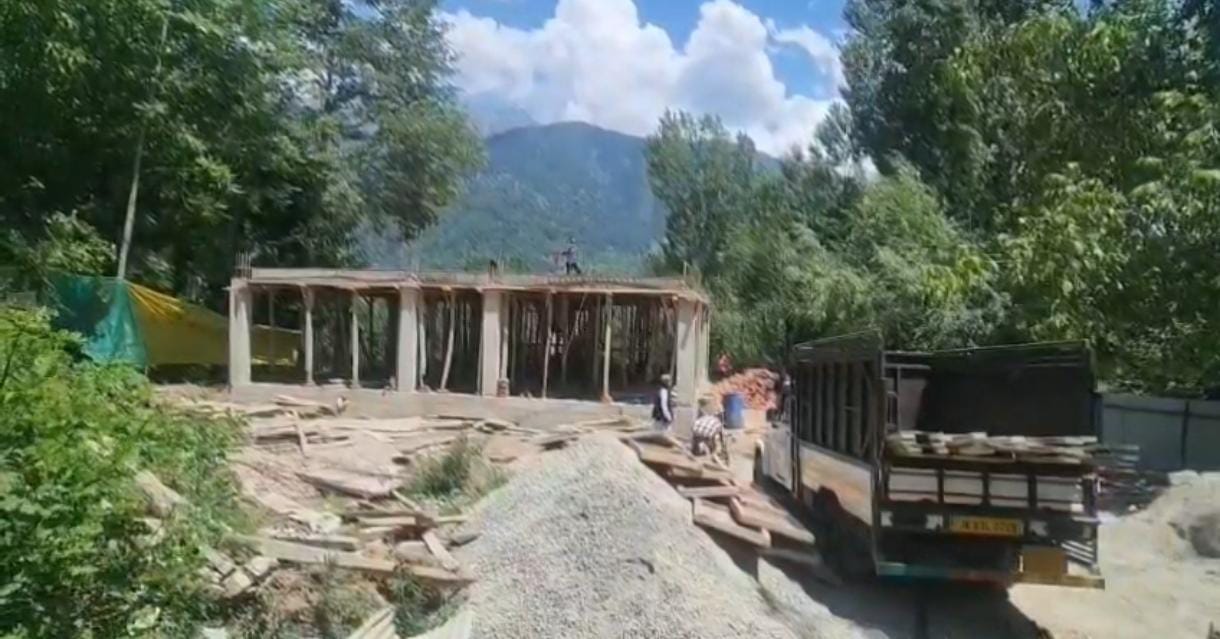
Across the fragile meadow town, illegal constructions continue unabated—hotels rising, shops expanding, structures mushrooming in zones meant to breathe. All this is happening despite repeated media reports, public outrage, and official claims of “demolition drives” by the district administration.
On the ground, the story looks very different.
“Demolition sirf gareeb ke liye hoti hai,” says Ramzan Ahmad, a local daily wager whose small shed was demolished last month. “Mera do kamron ka structure illegal tha, keh kar gira diya. Lekin saamne pahad jaisa hotel khada ho raha hai—usko koi haath nahi lagata.”
Ramzan’s voice echoes a sentiment shared widely in Pahalgam: that enforcement is selective, targeted, and deeply unfair.
Residents allege that demolition drives are conducted for optics—small structures, temporary shops, poor vendors—easy targets that create headlines and files. Meanwhile, massive hotels and commercial complexes continue construction, sometimes even after brief, symbolic sealing that is quietly reversed days later.
“It’s all drama,” says Irfan Ahmad Dar, a shopkeeper who has lived in Pahalgam all his life. “Ek din notice, doosre din photo, teesre din phir kaam shuru. Pahalgam saans nahi le paa raha. Yeh jagah ghut rahi hai.”
Irfan points towards newly built multi-storey hotels rising along ecologically sensitive stretches. “Yeh sirf illegal nahi hai—yeh crime hai nature ke khilaaf.”
Environmental experts have repeatedly warned that Pahalgam’s ecosystem is extremely fragile. Unplanned construction threatens water channels, forest belts, and natural drainage systems. With Kashmir already witnessing frequent floods, landslides, and erratic weather patterns linked to climate change, unchecked construction here could prove disastrous.
Locals fear that what is being ignored today could turn catastrophic tomorrow.
“God forbid agar koi bada natural event hua,” says a retired schoolteacher. “Yeh jo concrete jungle ban raha hai, woh sab kuch le doobega—log bhi, economy bhi, yatra bhi.”
The most troubling question remains unanswered: Where is the district administration?
Despite evidence on ground, despite visual documentation, despite repeated complaints, there is no visible action against large violators. No major demolitions. No sealing of powerful establishments. No public disclosure of offenders. No accountability of officials.
This silence has fueled allegations of a deep nexus between sections of the administration and the hotel mafia.
“If rules apply only to the poor, then rules mean nothing,” says a local environmental activist. “This is not governance. This is surrender.”
For many residents, Pahalgam is no longer just losing its green cover—it is losing its soul.
“This place was meant to heal people,” Irfan Dar says quietly. “Ab yeh khud bimaar ho raha hai.”
As illegal construction continues in full view, one thing is clear: cosmetic demolitions may satisfy files and photographs, but they will not save Pahalgam.
The question now is whether the administration will act decisively—or continue to watch as one of Kashmir’s most precious ecological treasures is slowly, deliberately, buried under concrete.
About The Author