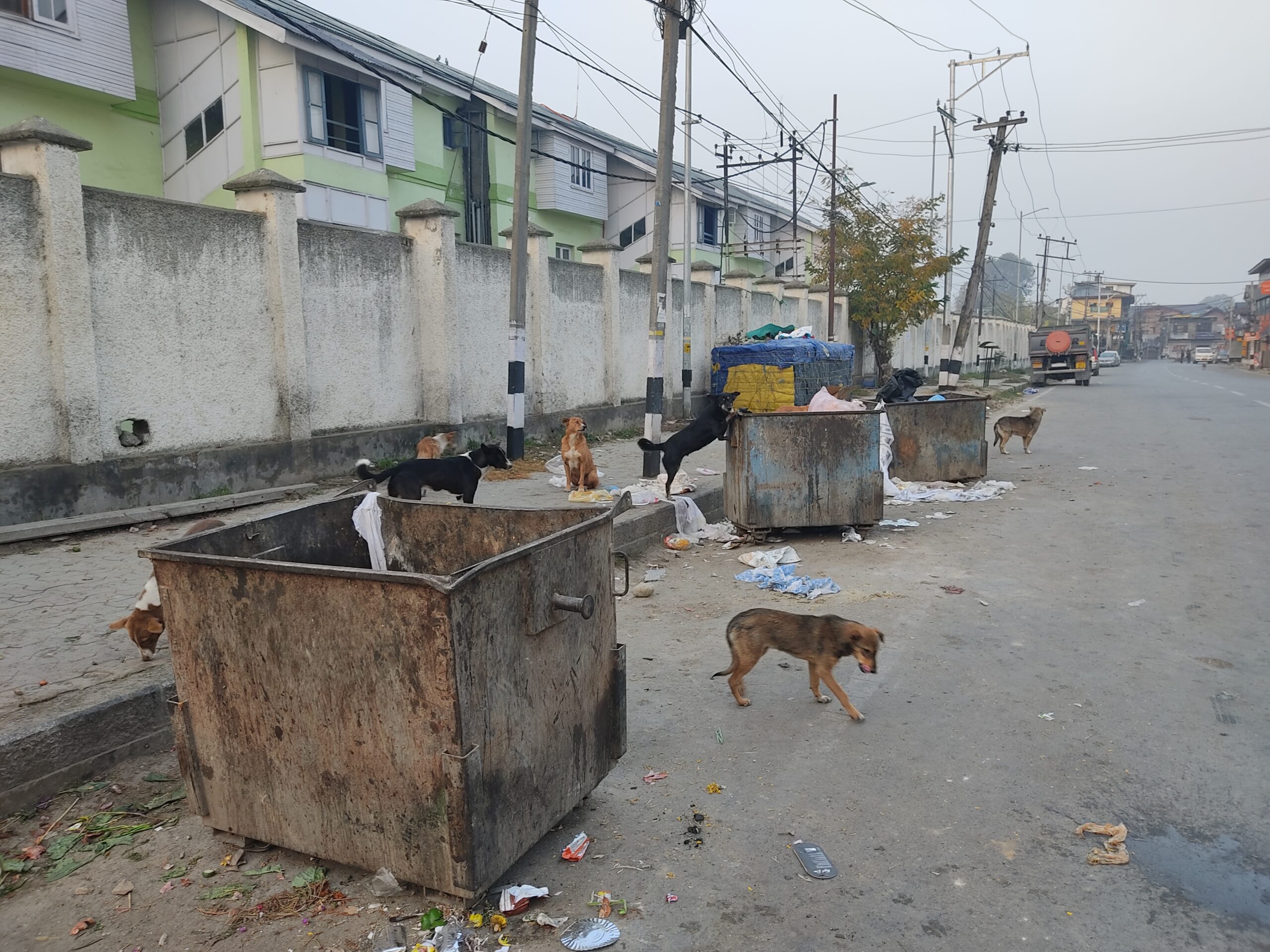
From Garbage to Grief: The Untold Story of Stray Dogs and Civic Neglect in Kashmir
By:-FJ-Aijaz Rather
Civic Sense and Social Responsibility: Keys to a Safer Environment
In the depths of the valley’s silence, a question echoes: Who does Kashmir truly belong to?
Yes, it belongs to us, and we call ourselves Kashmiris. But does that identity come as a free tag, or does it come with responsibility, honour, care, and belonging?
It demands a sense of social responsibility and civic awareness — to protect, to care, and to ensure that our shared spaces reflect our rich cultural values and integrity.
As our elders say, hoon ti chu pan’ni laxch seeth panin jaai saaf karaan. From the wild to the domestic, nature teaches us: dignity and honour begin with cleanliness.
Kashmir is a paradise. And those who live in paradise are not just residents; they are heaven dwellers. But can heaven dwellers afford to be careless with their paradise and its resources?
We owe this land more than love; we owe it care and respect. Kashmir has suffered; its people have suffered. Let us not be contributors to more pain for current and future generations.
Kashmir is in the grip of an environmental crisis. Climate change is disrupting daily life. Farmers face unpredictable rain and droughts, cities struggle with water shortages and pollution, and landslides and floods threaten life, homes, travel, and road connectivity. Children and the elderly are at risk due to heatwaves and polluted air.
Rising temperatures and ecological stress are fading Kashmir’s charm, risking a drop in tourism. Popular tourist spots like Pahalgam and Gulmarg suffer from plastic waste, sewage, and litter. Warmer winters and unreliable snowfall are cutting short winter sports seasons, thereby melting away winter tourism income.
It is crucial to recognize that climate change and environmental degradation are not phenomena happening on their own; we play a significant and direct role. Our daily habits are directly worsening the damage. Beyond food waste, discarded plastic, glass, and old clothes now litter our streets and choke our rivers.
Stray dogs wander the streets, chewing on leftover bones tossed carelessly. Often sharp or spoiled, these scraps injure them silently. Instead of easing their suffering, we add to their wordless pain and affect the cleanliness and hygiene of our neighbourhoods too.
The waste on the streets is the remnant of a society that forgets its duty once the yenwoul is done and wathal is dusted.
We were taught that food is a blessing, not a burden. That every grain carries the sweat of a farmer, the mercy of rain, and the grace and blessing of Allah. Yet today, our streets overflow with wasted wazwaan — lavish dishes half-eaten, tossed aside during marriage season, as if abundance excuses neglect.
Daily food waste from households is carelessly discarded on our streets, where it quickly piles up, rotting and spreading stench. This issue is particularly concerning near schools, hospitals, and residential areas, where leftover meals are routinely dumped. This practice significantly increases the danger of attacks by stray dogs on both children and the elderly. Numerous such incidents have been reported recently, highlighting an escalating public safety crisis.
Burning trash releases toxic smoke. Washing near water bodies sends chemicals into lakes. These repeated actions pollute land, air, and water — harming nature and us.
In September 2025, flash floods struck South Kashmir during the apple harvest season, submerging orchards in Anantnag, Pulwama, and nearby areas. Uprooted trees, fruit loss, and a highway closure due to landslides caused more than Rs 200 crore in damages, revealing our lack of readiness for extreme weather and the urgent need to pay attention to our habits that harm our natural resources and environment.
As I opened my eyes, I saw the roads neat and clean, as if the dirt had been removed, never to return. There was no litter around. Dustbins stood covered and orderly, and even the stray dogs seemed fewer, calmer.
Along the riverbanks, the water sparkled and reflected the sunlight shining off its surface like scattered gold threads with silver beads. The reflections danced beneath the bridges, tracing every base and edge, stretching far into the distance — as far as my eyes could see.
Dal Lake glowed like a pearl cradled in the arms of the mountains, its surface dotted with shikaras carrying blooming flowers. The houseboats floated like fragments of a fairy tale — pristine, graceful, untouched by litter or waste.
The saffron, gold of Kashmir, seemed to whisper the message of gratitude, offering thanks and calling upon every Kashmiri to safeguard the land that nurtures us all.
Lest I forget to mention — I woke up, from the dream into reality!
The gleam faded; the roads were no longer spotless. The breeze carried a sharp, foul smell of rotten food from the streets. It hit me like a sword in the chest; I felt choked and could barely breathe. The dustbins stood overturned, their contents spilling into the streets.
As our traditional tumakhneyr echoes through the valley, let the call for cleaner surroundings rise even louder. Let the fragrance of henna outshine the stench of waste, so that our celebration carries not just sound, but a sense of care.
Let our homes be full of blessings, and our neighbourhoods clean and cared for. Let us say no to single-use plastics, stop wasting water, and value all natural resources so we can enjoy a better life today and leave a healthier Kashmir for our future generations.
We pledge to honour our land, protect its beauty, and uphold the values woven into our culture and faith.
Let our actions reflect true love and care for the land we belong to — for Kashmir, for Kashmiriyat, and for the well-being of every Kashmiri!
(JKNEWS NATION)
About The Author